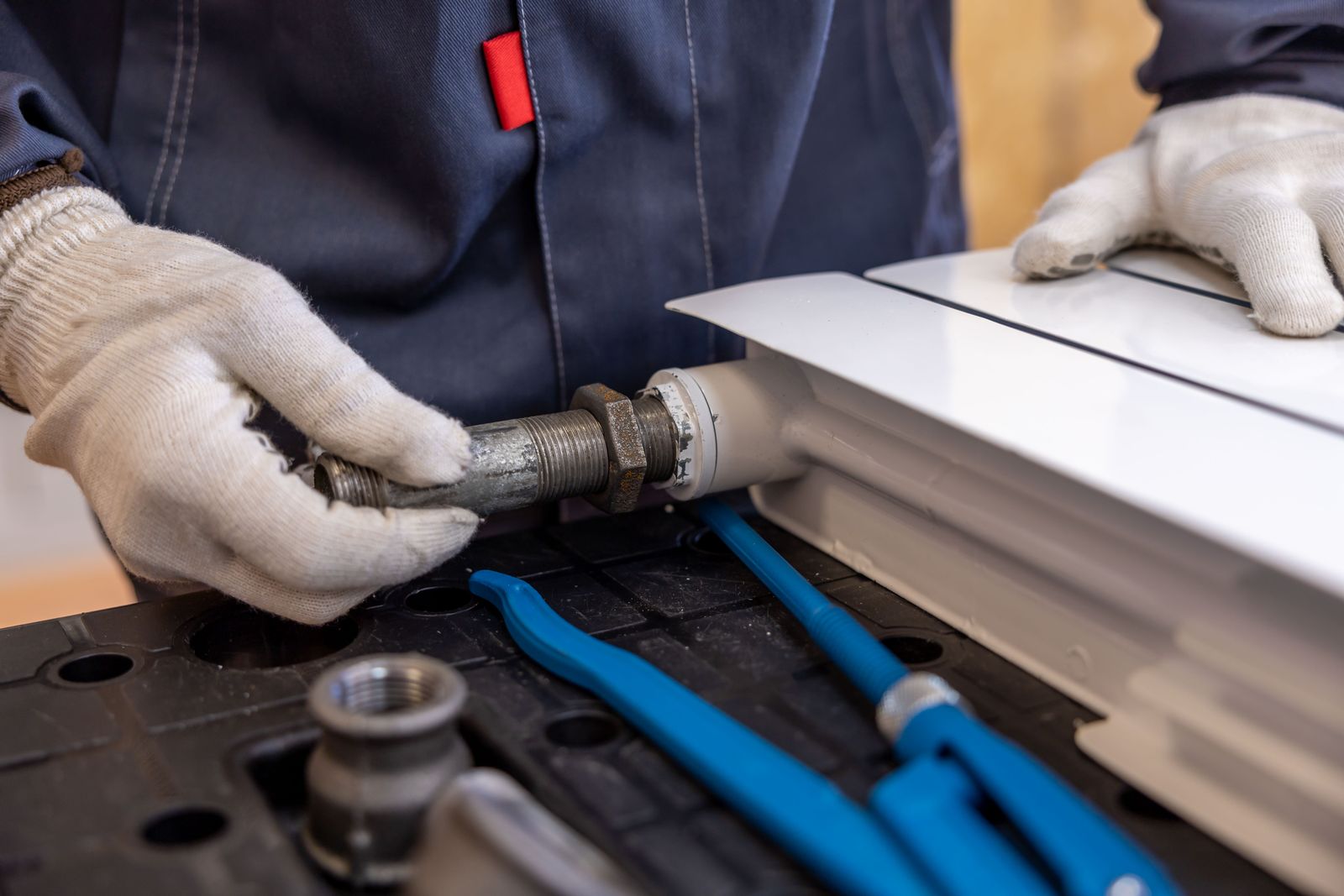
What water heater maintenance includes
A maintenance visit is a check-up for the whole heater, not just a quick drain. On a tank model the technician usually starts by looking at the age and condition of the unit, the connections on top and the floor around the base. They then flush the tank to clear sediment, inspect the anode rod, check the temperature and pressure relief valve and its discharge pipe, and look at the expansion tank if your home has one.
On a gas heater the visit also covers the burner area, the pilot or ignition and the vent, so the technician can see that the flame looks healthy and the exhaust is drawing properly. On an electric heater they check that both elements and thermostats are doing their jobs. You come away with a clear picture of the tank's condition and any repairs worth planning for.
Sediment in water heater tanks and hard-water scale
Sediment in water heater tanks is the most common reason a heater gets noisy and slow. Minerals that are dissolved in the water come out of solution when the water is heated and settle on the bottom of the tank. Over time that layer grows. On a gas heater, water trapped under it boils in small bursts and you hear rumbling or popping. On an electric heater, sediment can bury the lower element and make it fail sooner.
Sediment also takes up space that should hold hot water, and it acts as insulation between the burner and the water, so the heater works harder for the same result. Scale is the harder form of the same minerals, and it can build up on elements, inside fittings and in tankless heat exchangers.
How a water heater flush is done
A water heater flush means running water out through the drain valve near the bottom of the tank until it clears, often with short bursts of fresh water to stir up loose sediment. The technician turns the heater to a safe setting first, protects the floor and directs the water to a suitable drain. Done properly, a flush can quiet a rumbling tank and help it recover faster.
It is not always the right move. On an older tank that has never been flushed, the sediment may have hardened, and the drain valve itself may be fragile. Disturbing it can lead to a valve that will not close or a drip that was not there before. The technician looks at the age and condition first and tells you whether a flush is worth doing, which is a good reason to leave this to them rather than trying it yourself.
The anode rod and anode rod replacement
An anode rod is a metal rod that hangs inside the tank from the top. It is designed to corrode slowly so that the steel tank lining does not. As long as there is enough of the rod left, it keeps doing that job. Once it is mostly worn away, the tank itself is more exposed to corrosion.
The technician can inspect the rod and recommend anode rod replacement when it is heavily worn. How fast a rod wears depends on the water and how the heater is used, so there is no fixed schedule that suits every house. A rotten-egg smell from the hot water is sometimes linked to a reaction between the rod and the water, and a different type of rod can help. The pro explains the options.
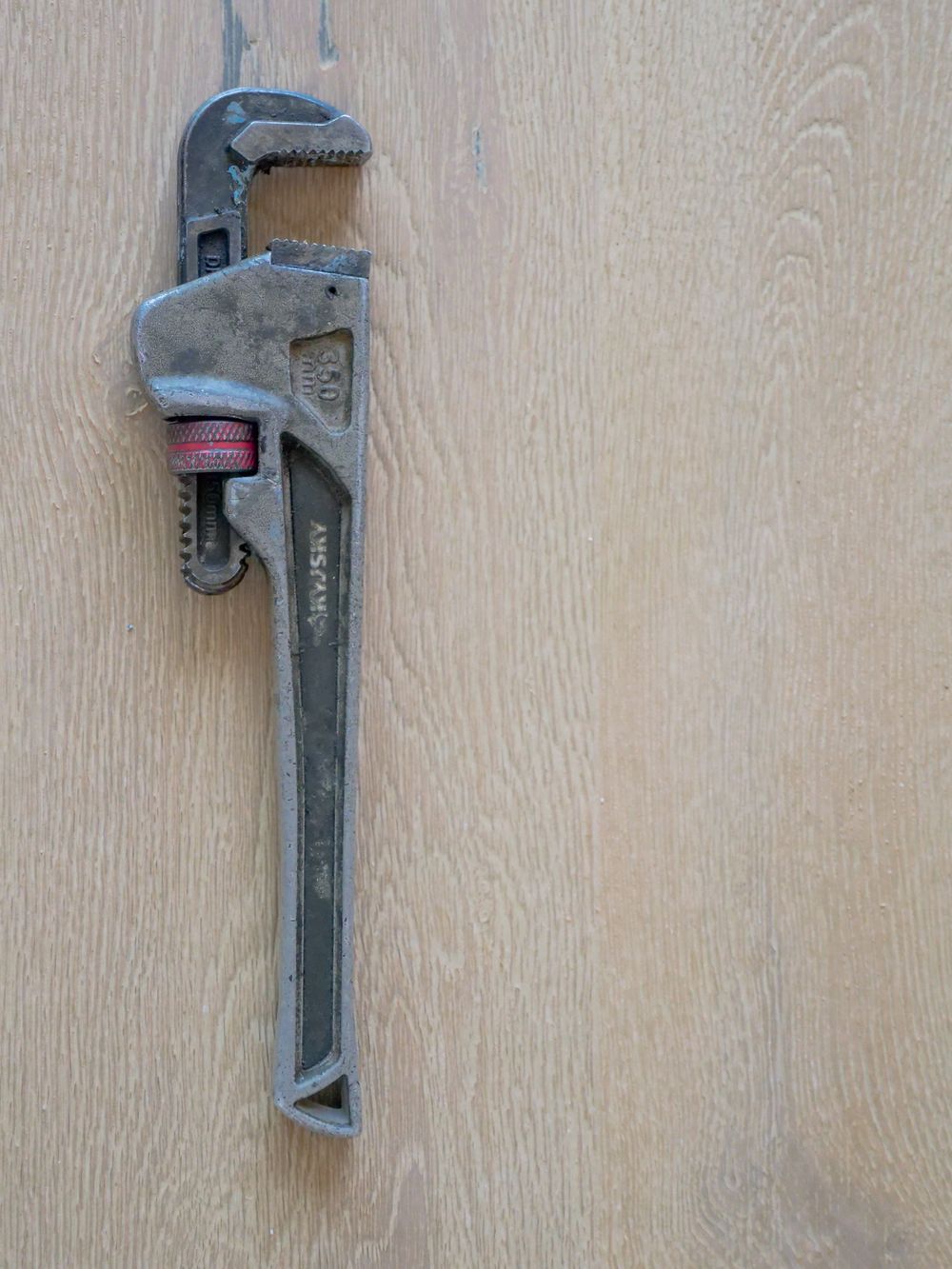
Relief valve and expansion tank checks, by the technician
The temperature and pressure relief valve is the heater's safety outlet. If the temperature or pressure inside the tank gets too high, the valve opens and releases water through its discharge pipe. It needs to be able to do that when it matters, which is why the technician checks it and the pipe attached to it. Testing the valve can cause it to drip afterwards on older units, so this is one check homeowners should leave to the pro.
Many homes also have a small expansion tank on the cold-water line near the heater. It gives heated water somewhere to expand so pressure does not build up in the system. The technician checks that it is still working as intended. If the relief valve has been dripping, a failing expansion tank is one of the things they look at.
Tankless descaling
A tankless water heater has no tank to fill with sediment, but scale can build up inside its heat exchanger, where the water passes through narrow passages. That can lead to error codes, reduced flow or water that swings between hot and cool.
Descaling means circulating a cleaning solution through the unit to dissolve the buildup, then flushing it clean. Many units also have an inlet screen that needs clearing. The technician follows the manufacturer's method for your model and checks the unit is running normally afterwards.
When maintenance is no longer worth it
Maintenance helps a sound tank. It cannot repair one that is failing. If the tank is leaking from its body, if there is rust at the base or around the fittings, or if a heater well into its second decade needs several repairs at once, the technician will tell you plainly that money is better spent on replacement.
If you see water on the floor, start with the page on a leaking water heater. If you are already planning ahead for a new unit, the guide to water heater installation explains sizing and the installation day.
Maintenance in Burke homes
Most Burke homes were built between the 1960s and the 1980s, and many have had at least one replacement heater since. In split-levels and colonials the heater usually sits in a basement or lower-level utility room, which makes flushing straightforward when there is a floor drain nearby. In townhomes the heater is often in a closet with no drain, so the technician plans where the water goes before starting.
Long Burke winters also matter. Colder incoming water means the heater runs longer for months at a time, and that is when sediment and worn parts show themselves. For homes around the lake, see what is involved in water heater repair in Lake Braddock. For late-1970s colonials with full basements, read about water heater repair in Signal Hill.
A maintenance visit may be all it needs. Call to find out.